 Feature
The extraordinary lives right next door to the ordinary.
Feature No.020 — Expanded Everyday
Expanded Everyday:
A Week in Kyoto at Sakura Season
Blossoms that refused to peak stretched a weekend trip into a week. Working remotely by day, doing hanami at dawn and after dark, a Tokyo office worker slips into the daily rhythm of Kyoto — and finds a city that is even better to live in than to sightsee.
Sakura season. I live in Tokyo, and I had planned a two-day weekend trip to Kyoto — a ritual of mine since my student days, when I first stumbled into the city at cherry-blossom time and never quite got over it.
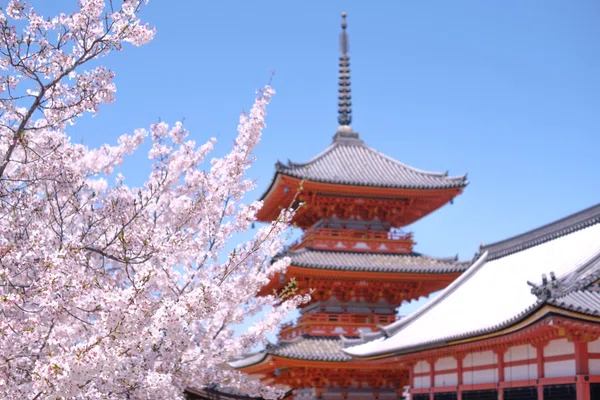
By the usual calendar, the first weekend of April should mean full bloom. Not this year. What greeted me was a 60-percent bloom — beautiful, but not what I had crossed half of Honshu for. Going home without seeing the real thing felt like a waste. So I extended the trip. By a week.
THE PLAN2 DAYS→BLAME THE SLOW BLOOM7 DAYS
And somewhere in that week, I noticed something that had nothing to do with flowers: Kyoto is not merely a city to sightsee. It is a delightful city to simply live in.
Hanami, Every Day
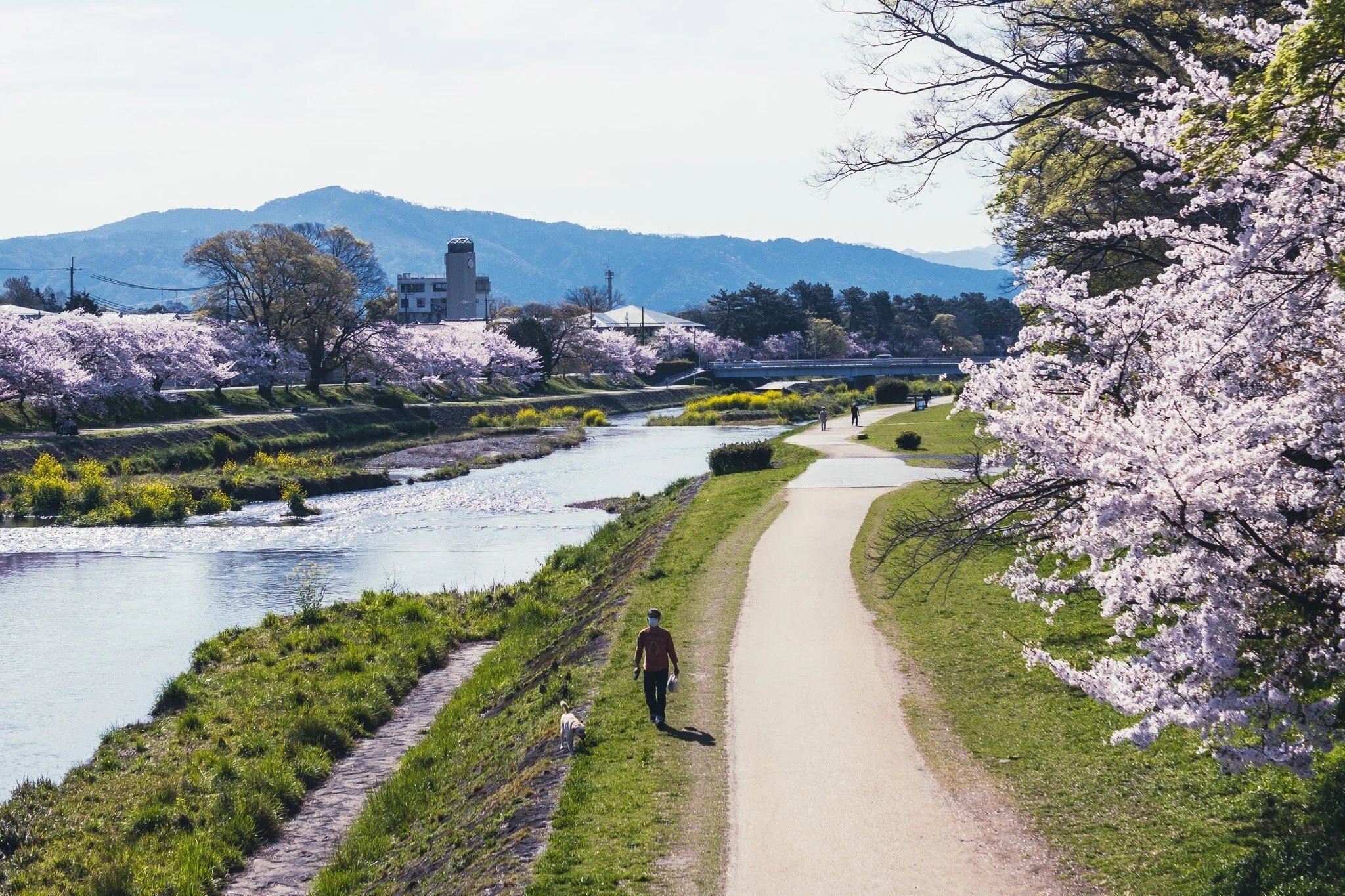
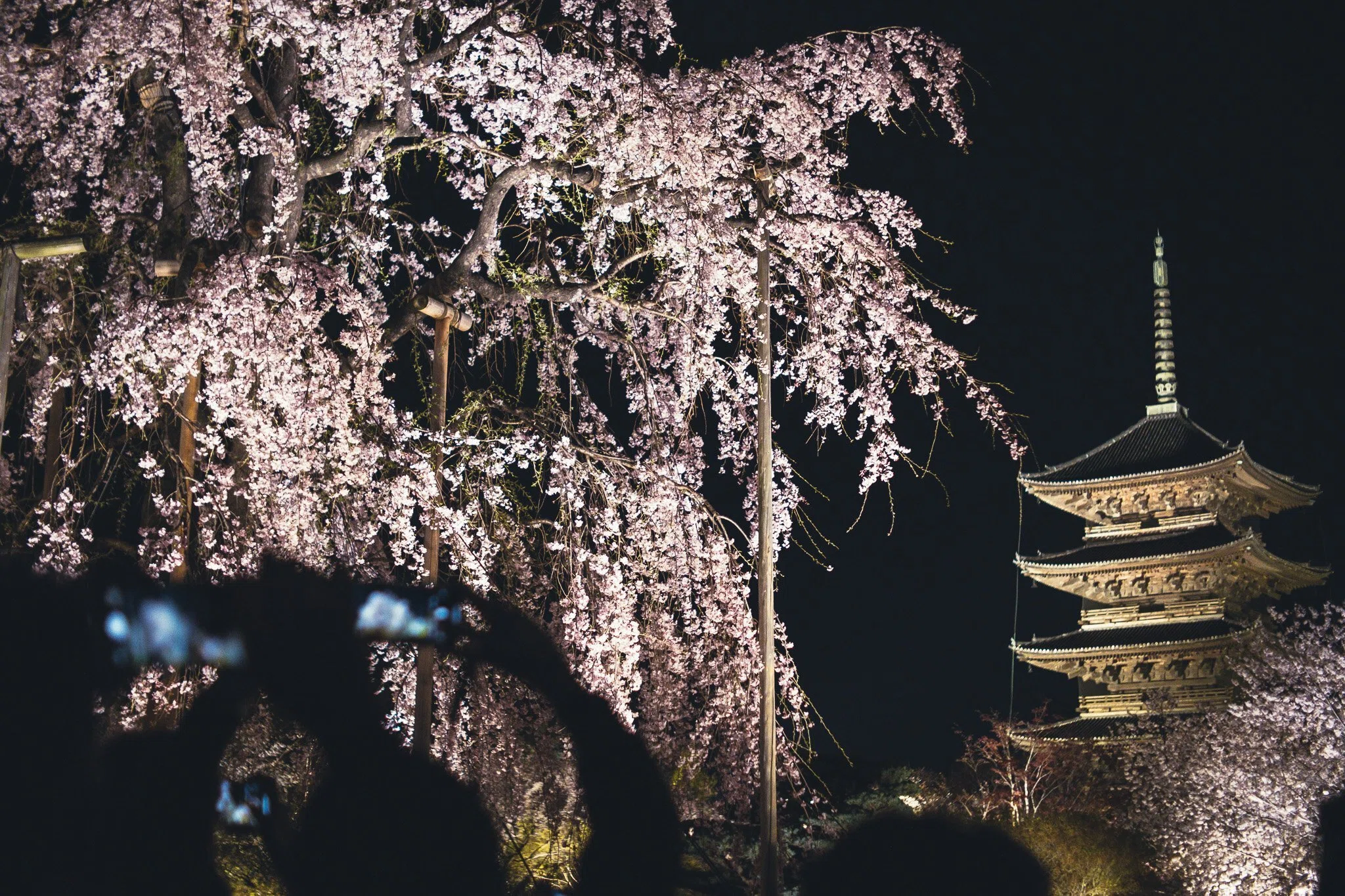
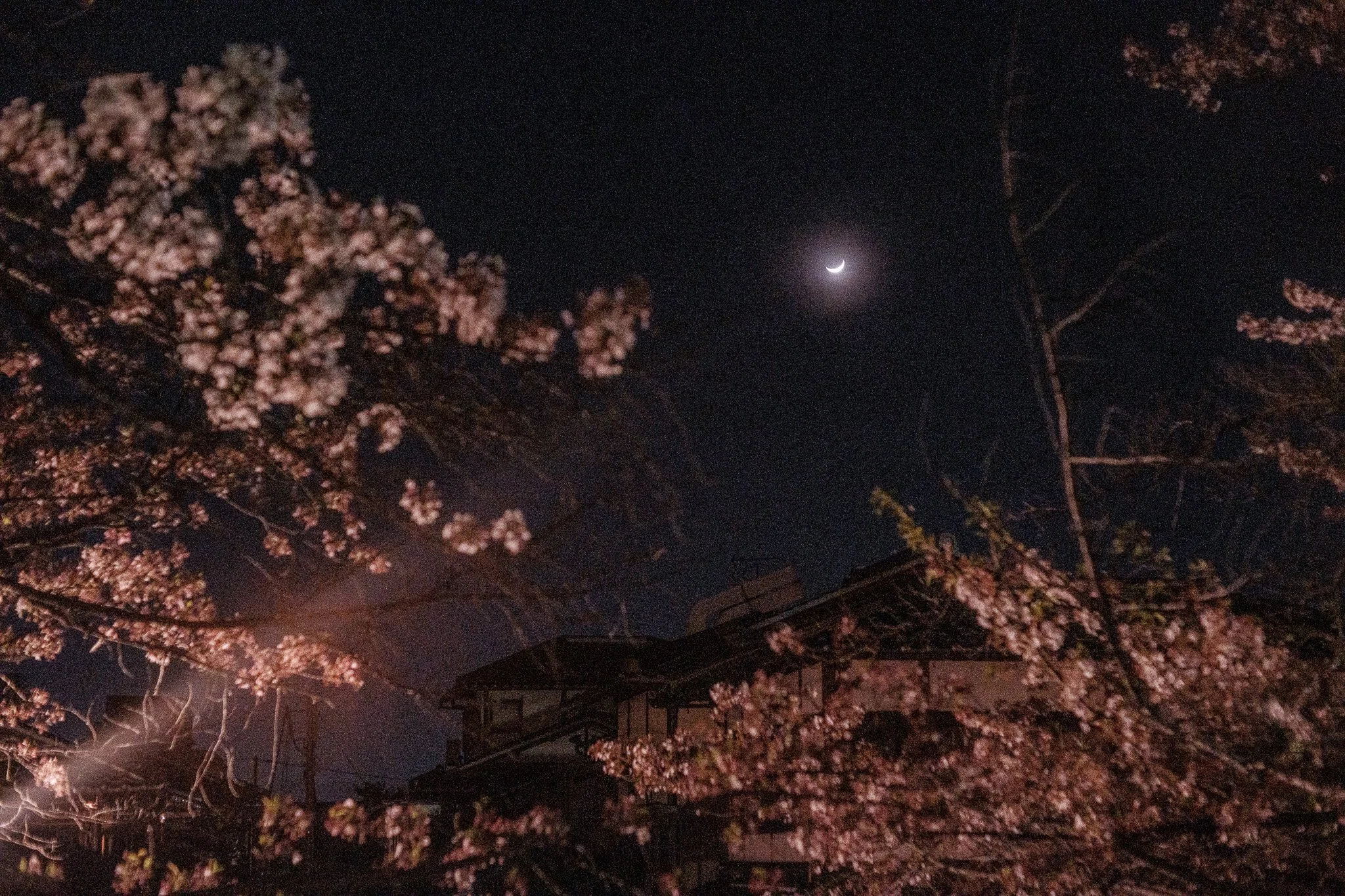
My Kyoto weekdays settled into a shape: hanami early in the morning, work through the day, hanami again at night. As an office worker I had no choice but to work — which meant the blossoms got only my mornings and evenings. This constraint turned out to be a gift. The rhythm of shuttling between work and blossoms felt remarkably good.
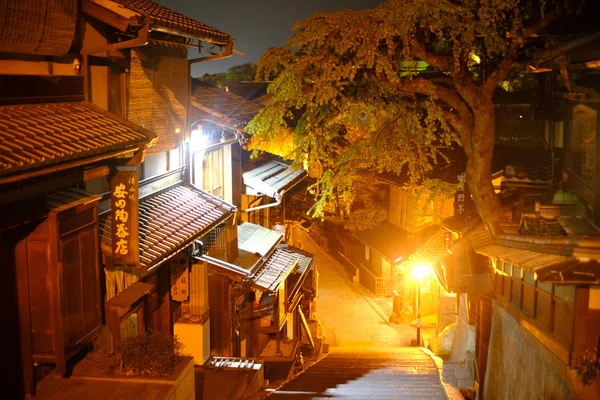
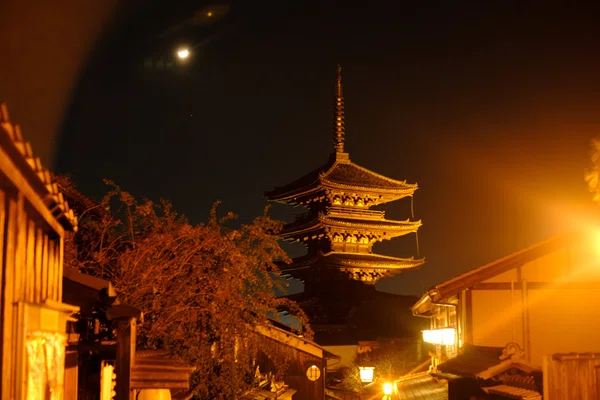
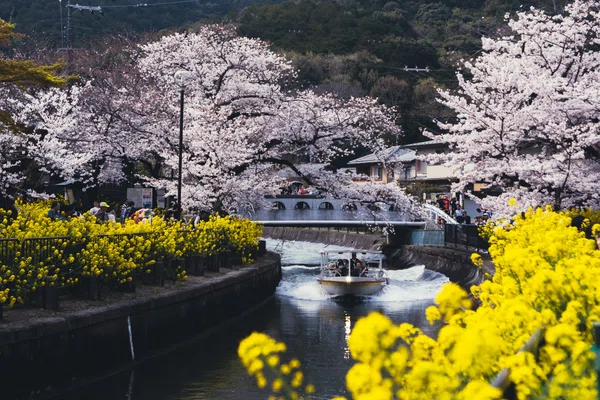
On weekday mornings I walked the blossoming banks of the Kamo River among locals on their commutes, ate breakfast at a kissaten — a culture Kyoto keeps gloriously alive — and clocked in at my company's Kyoto office. At noon I joined the local salarymen at a teishoku diner. After work: night blossoms, then a bowl at Kairikiya, a beloved Kyoto ramen chain, on the walk home.
Because I had to work through the day, I ended up borrowing the daily rhythm of the people who actually live there — and that gave the week a satisfaction plain sightseeing never delivers.

Conservative, yet OpenChapter 02
To claim that one week made me an honorary Kyotoite is surely a delusion. And yet — somehow — that is exactly how it felt.
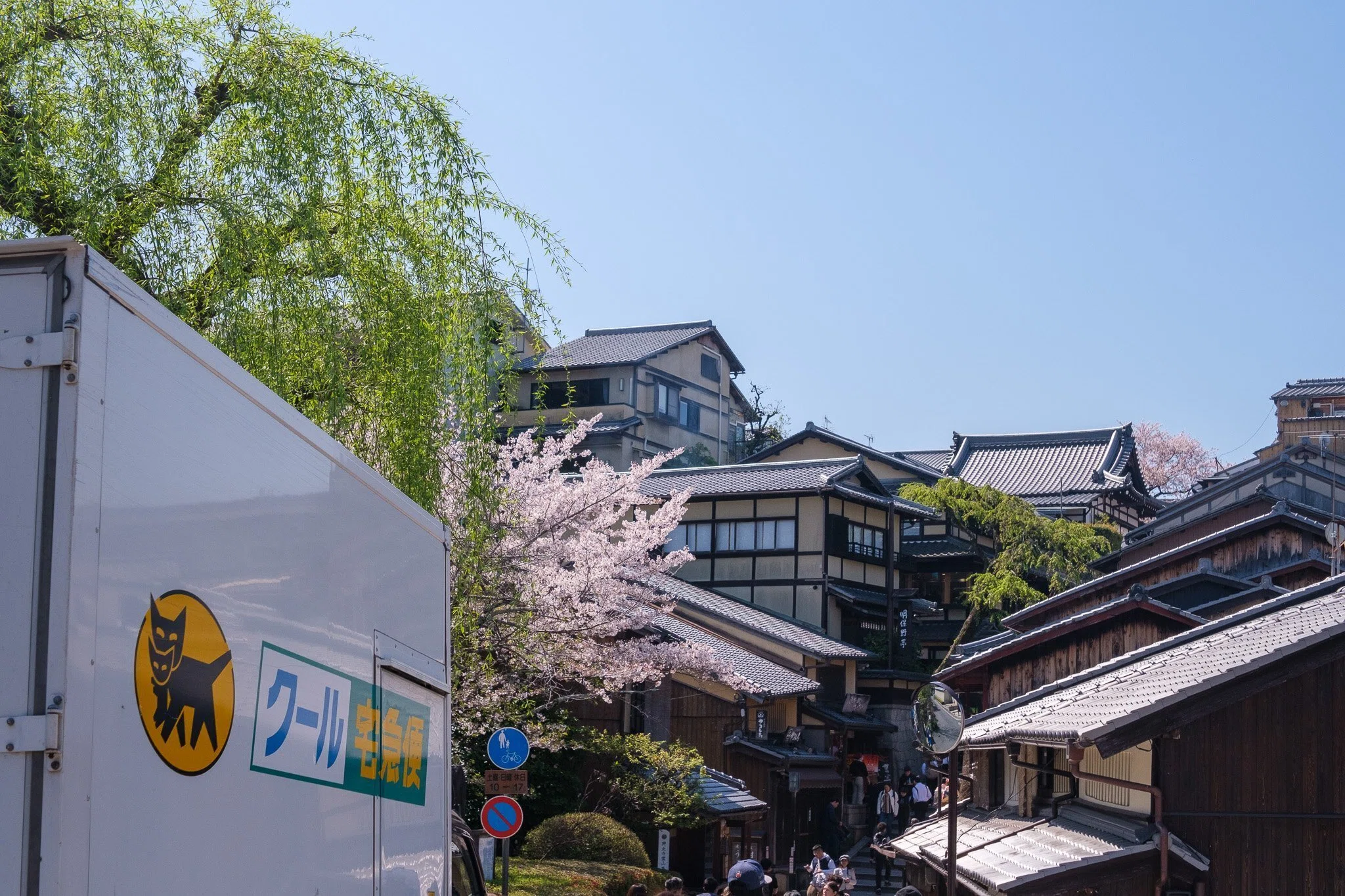
Kyoto was Japan's capital for a thousand years, and its people carry the pride of that lineage. But look at the numbers: a tenth of the city's population are university students, and half of its overnight guests are foreign visitors. For all its tradition, this is a city with a long habit of receiving outsiders. Kyoto, in other words, is not a preserved relic. It is a living city where the traditional and the transient share the same streets.
It's thanks to that odd blend — conservative at the core, open at the edges — that even a one-week visitor like me could feel less like a tourist and more like a small, temporary part of the city's fabric.
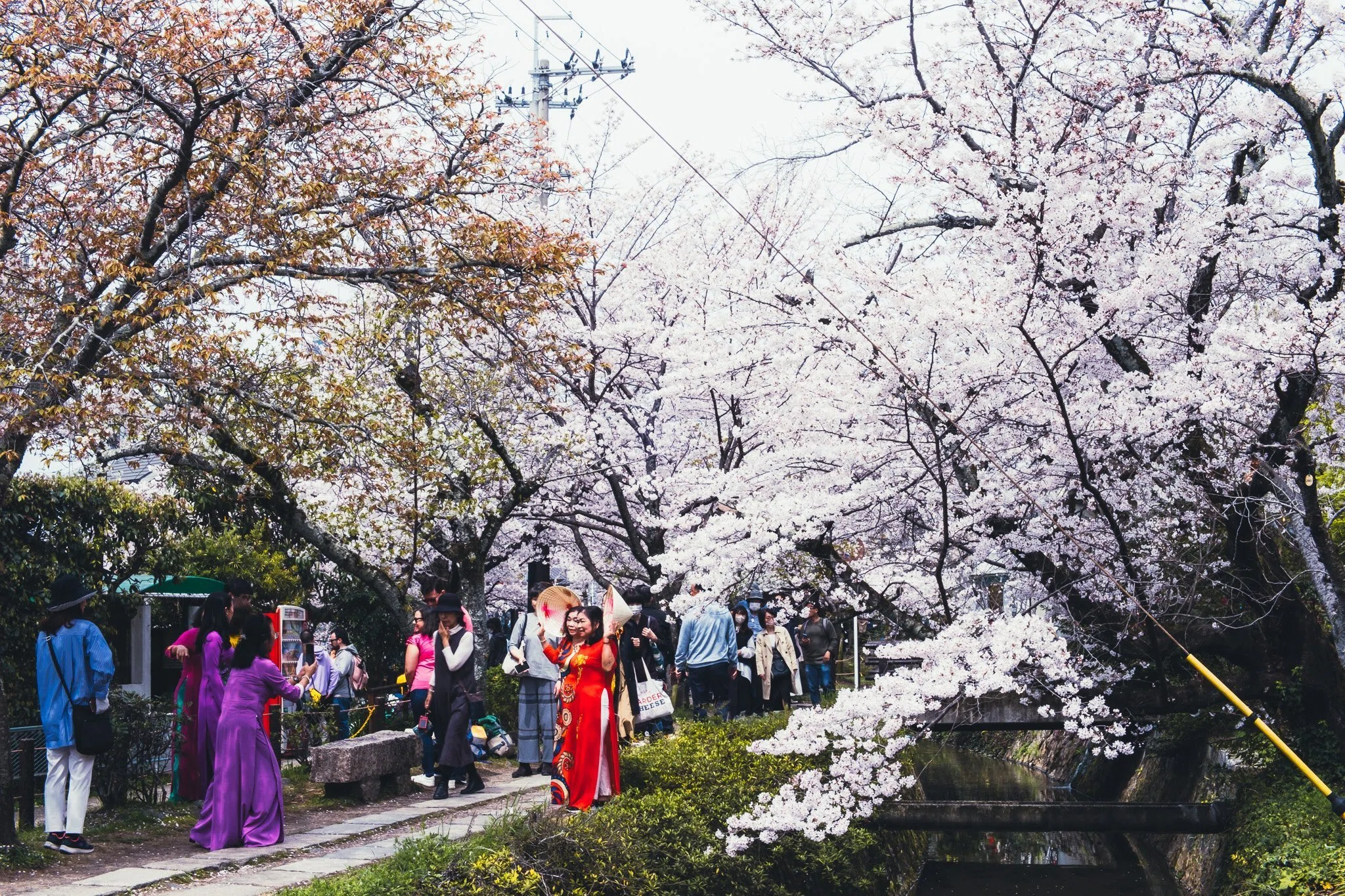
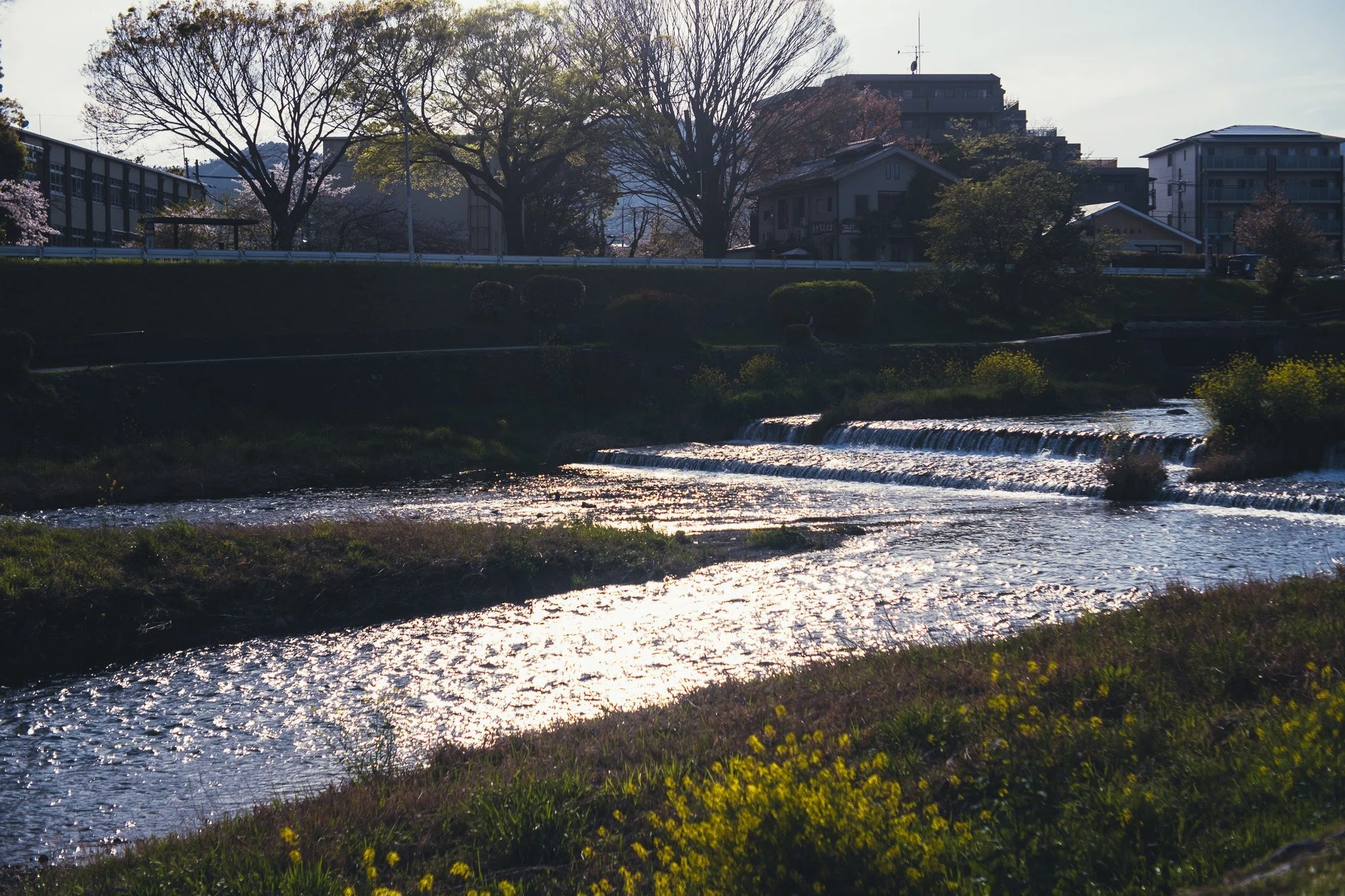
The Kamo River, Where Everything Crosses
Refusing to waste precious hanami hours, I rose at five each morning and walked the river under the blossoms. Watching the current — the same current people watched a thousand years ago — the flow of time felt like one long, unbroken story. It was profoundly calming.
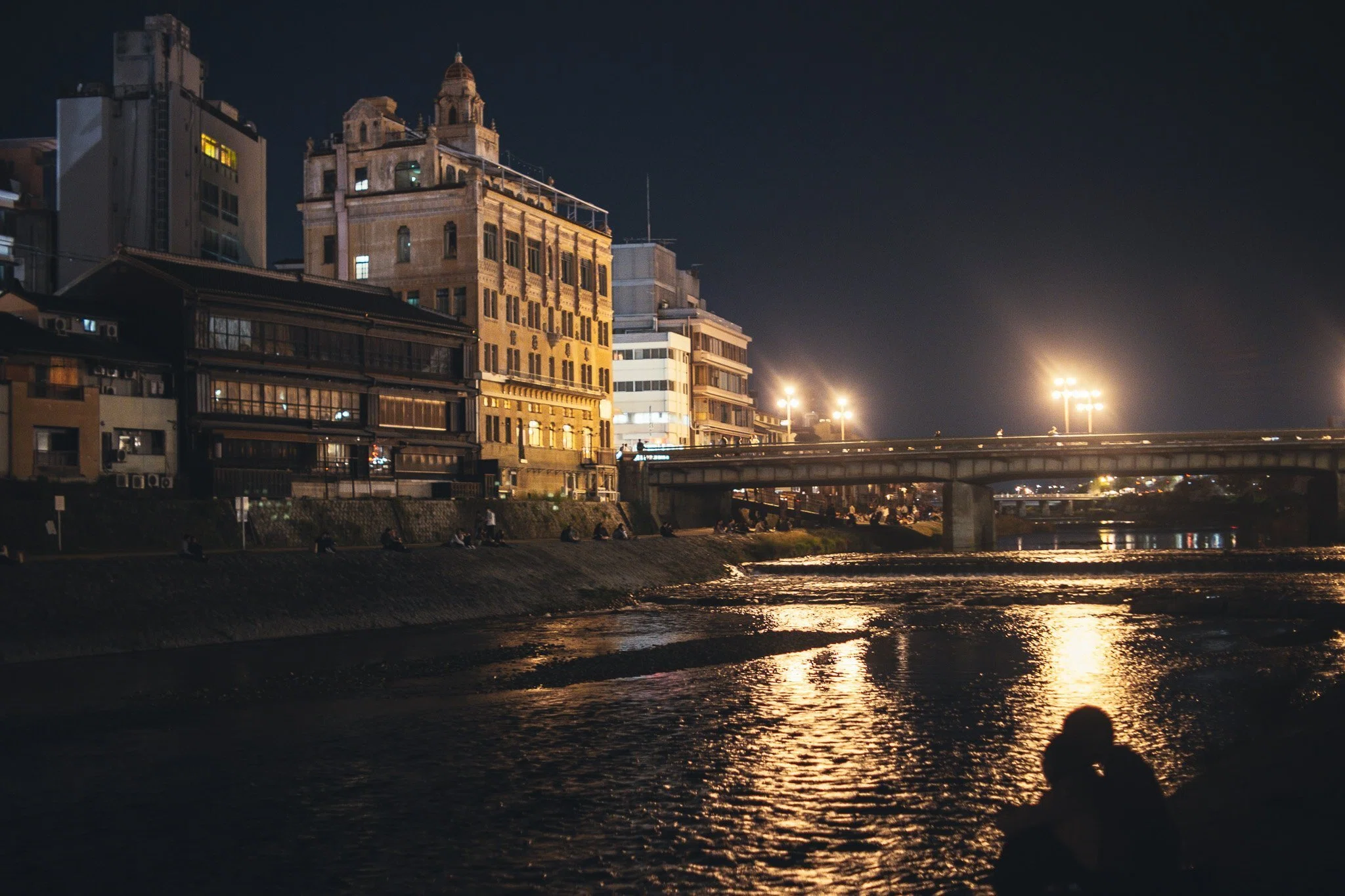
The night river is the morning's opposite: lively. Students and travelers strolling with drinks in hand; couples settled on the banks at famously regular intervals — a Kyoto phenomenon in its own right. These are not my people, strictly speaking. And yet I never once felt out of place. On this riverbank, everyone is somehow, inexplicably, a friend. It is a sensation this city alone produces.
Kyoto's kissaten offer the same kind of space: inside the city, yet a step outside the everyday, where nature and culture quietly coexist. These pockets of the extraordinary, sitting just beside ordinary life, are precisely what make the ordinary richer.
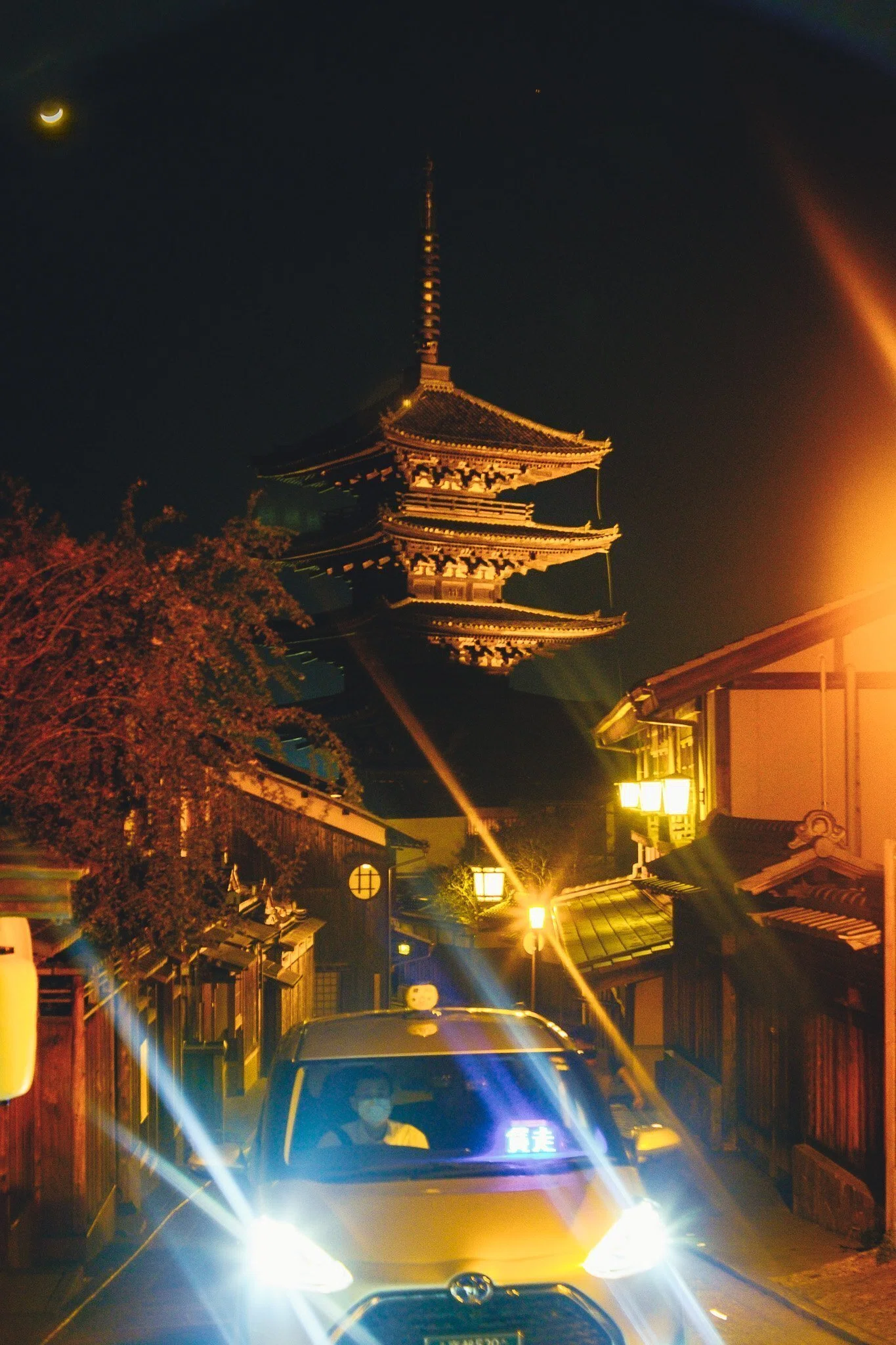
The Expanded Everyday
Looking back on the week, one theme kept surfacing: the expanded everyday. Tradition and modernity. Conservatism and openness. Work and blossom-viewing. Across layer after layer, I shuttled between the ordinary and the extraordinary. Not the manufactured extraordinary of a theme park or a festival — not an opposite pole to daily life, but something you sense one step to the side of it.
Crossing that boundary freely put my own daily life in perspective, and new value appeared where routine used to be. As a city that expands the everyday, Kyoto has few rivals — that was the real discovery of the week. You don't need a sabbatical. A laptop, a slow bloom, and a willingness to stay a little longer will do.
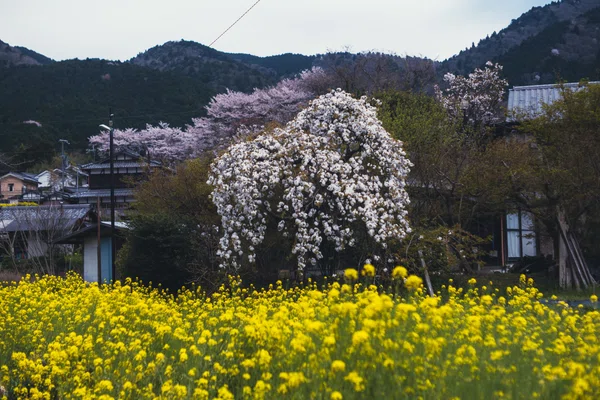
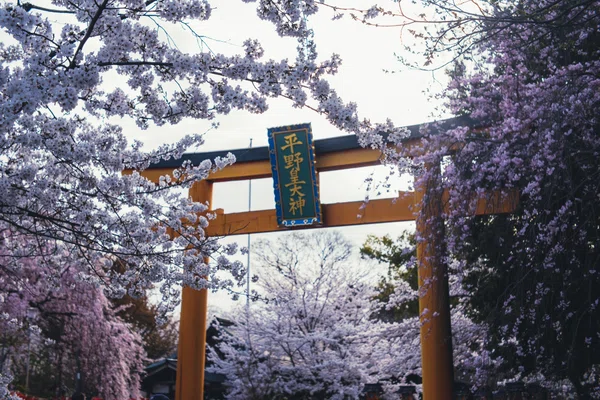
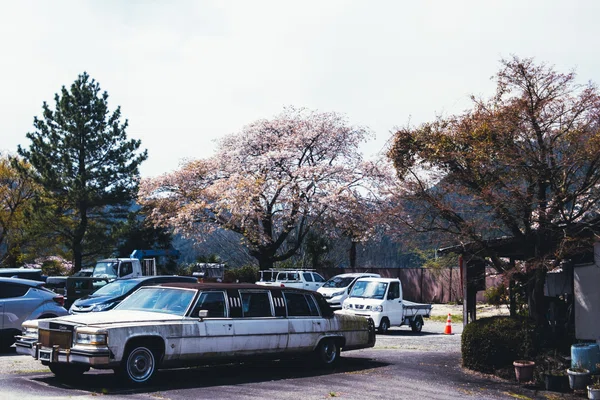
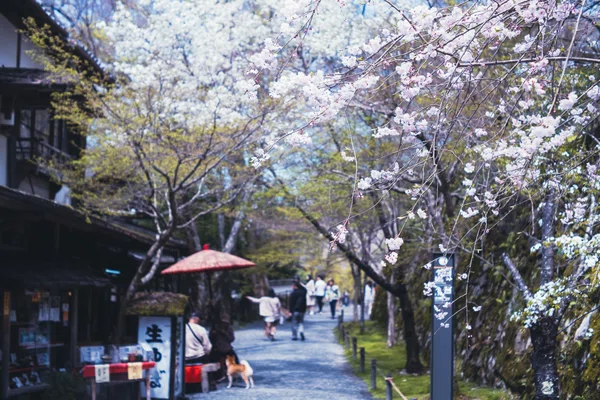
Outtakes — The Photos That Didn't Fit
Now — in which city shall we
expand the everyday next?